





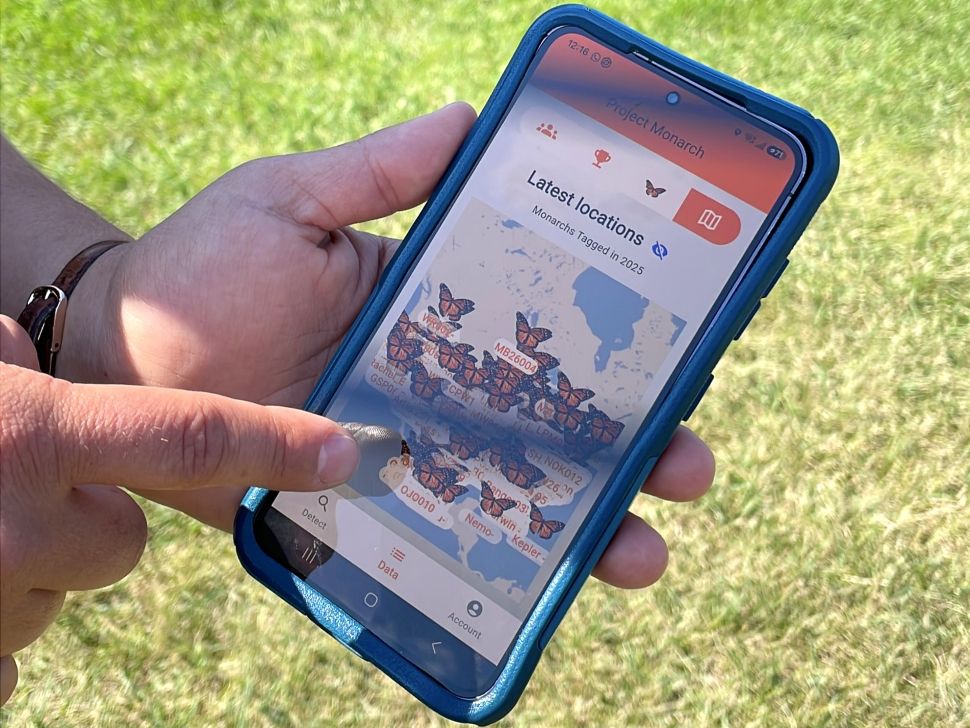
A tiny solar-powered tracker attached to a monarch butterfly could help researchers better understand one of North America's most remarkable migrations.
Conservation staff in Manitoba are taking part in a nationwide effort to track monarch butterflies and learn where they travel, which habitats they use, and what threats they face along the way.
Laura Burns, conservation programs manager at Assiniboine Park Zoo, says understanding those threats is critical to helping monarch populations recover.
"If we know they're declining but we don't know why, we can't fix the problem."
The project is deploying 29 working tags in Manitoba. About 19 butterflies were expected to be tagged during one day of the project, with another 10 planned for the following day at Assiniboine Park.
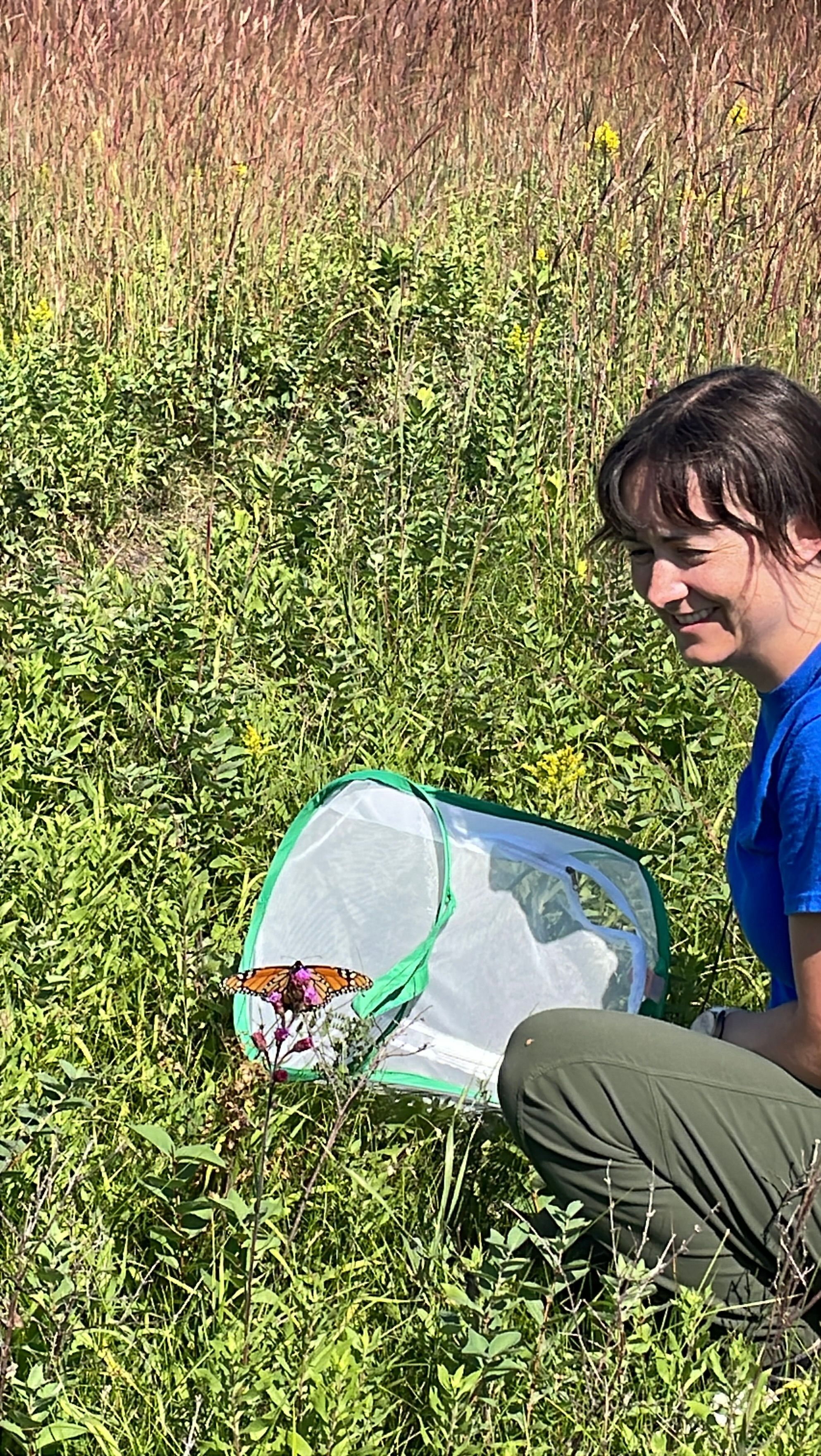 Edie the monarch is the first to be released with tracker.
Tracking monarchs across North America
The tags can be detected by specialized telemetry towers and through Bluetooth using the Project Monarch smartphone app.
People who spot a monarch can use the app to scan for a nearby tagged butterfly, creating a growing network of observations across North America.
Researchers hope those detections will eventually show where Manitoba monarchs travel through the United States and into Mexico.
The data is being collected as part of a nationwide project led by a researcher with Environment and Climate Change Canada. Researchers will use it to study habitat use, survival rates, and potential threats facing the butterflies.
Burns says the tracking technology is still relatively new, with the tags having been deployed for about three years.
Researchers are already learning more about where monarchs travel, how far they can fly in a day, and which habitats they use.
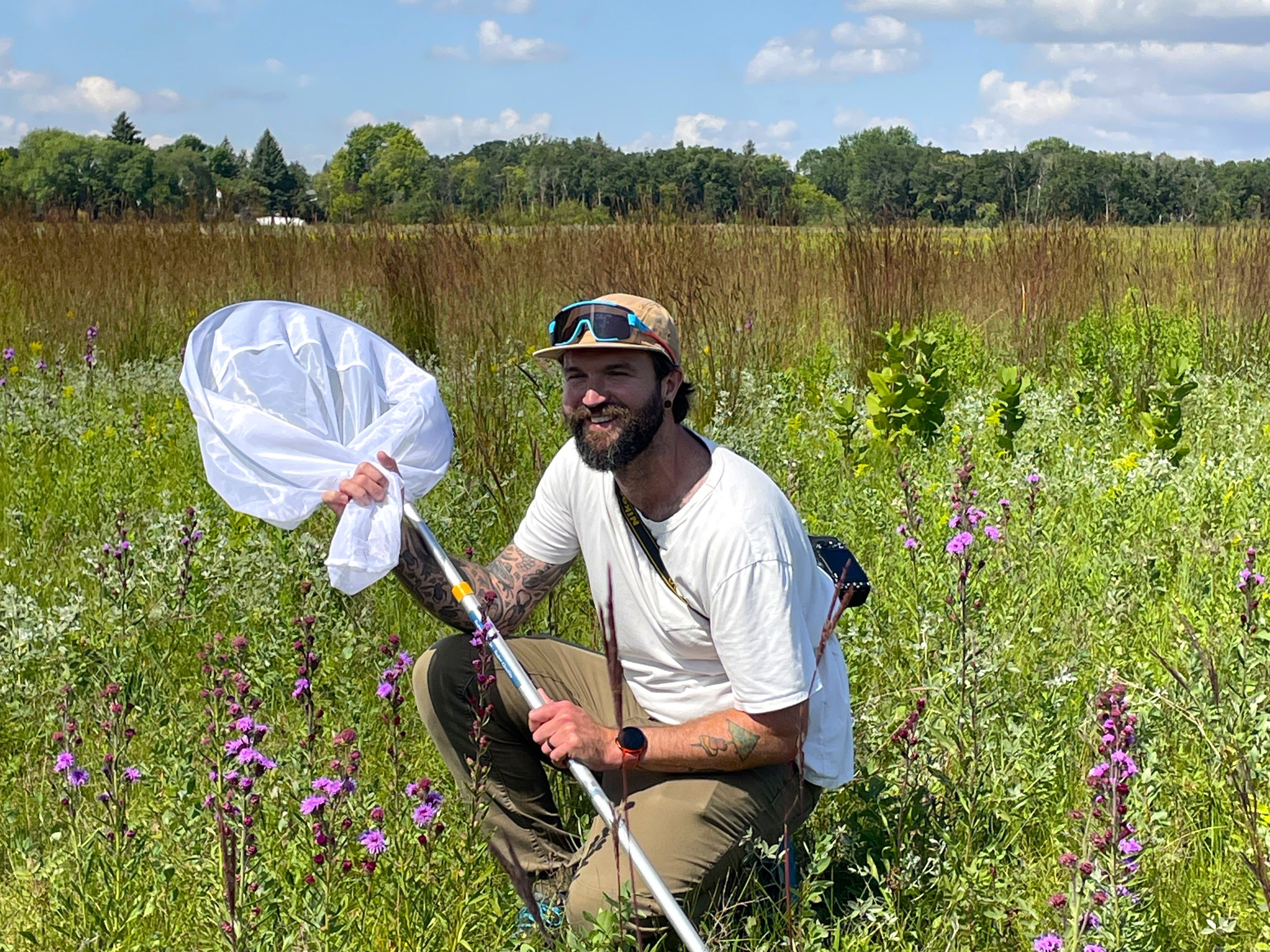 Researchers catch monarchs, asscess health and attach trackers.
Preparing a monarch for its journey
Before a butterfly receives a tracker, it has to pass a health assessment.
Staff catch wild monarchs and check that they are healthy, recently emerged from their chrysalis, and free of a high parasite load. They also make sure the butterfly is heavy enough to carry the tracker without affecting its flight.
The butterfly is then chilled for up to 10 minutes to slow its body processes. Staff immobilize its wings and use a small amount of eyelash glue to attach the tiny tracker to its thorax.
The tags contain solar panels that recharge in the sun. Their signals can then be picked up by telemetry towers and Bluetooth-enabled phones.
One of the butterflies tagged in Manitoba was named Eddie after its pre-assigned tracking code happened to resemble the name.
For Burns, releasing Eddie was a milestone. It was the first time she had released a butterfly carrying one of the tracking tags, and the first such release in Manitoba.
Now, researchers hope Eddie will complete the thousands-of-kilometres migration to Mexico.
"It's one of the most incredible migrations in the insect world," Burns said, noting that not every monarch will survive the journey.
Even butterflies that do not make it all the way can provide valuable information about where survival challenges occur and where researchers lose track of them.
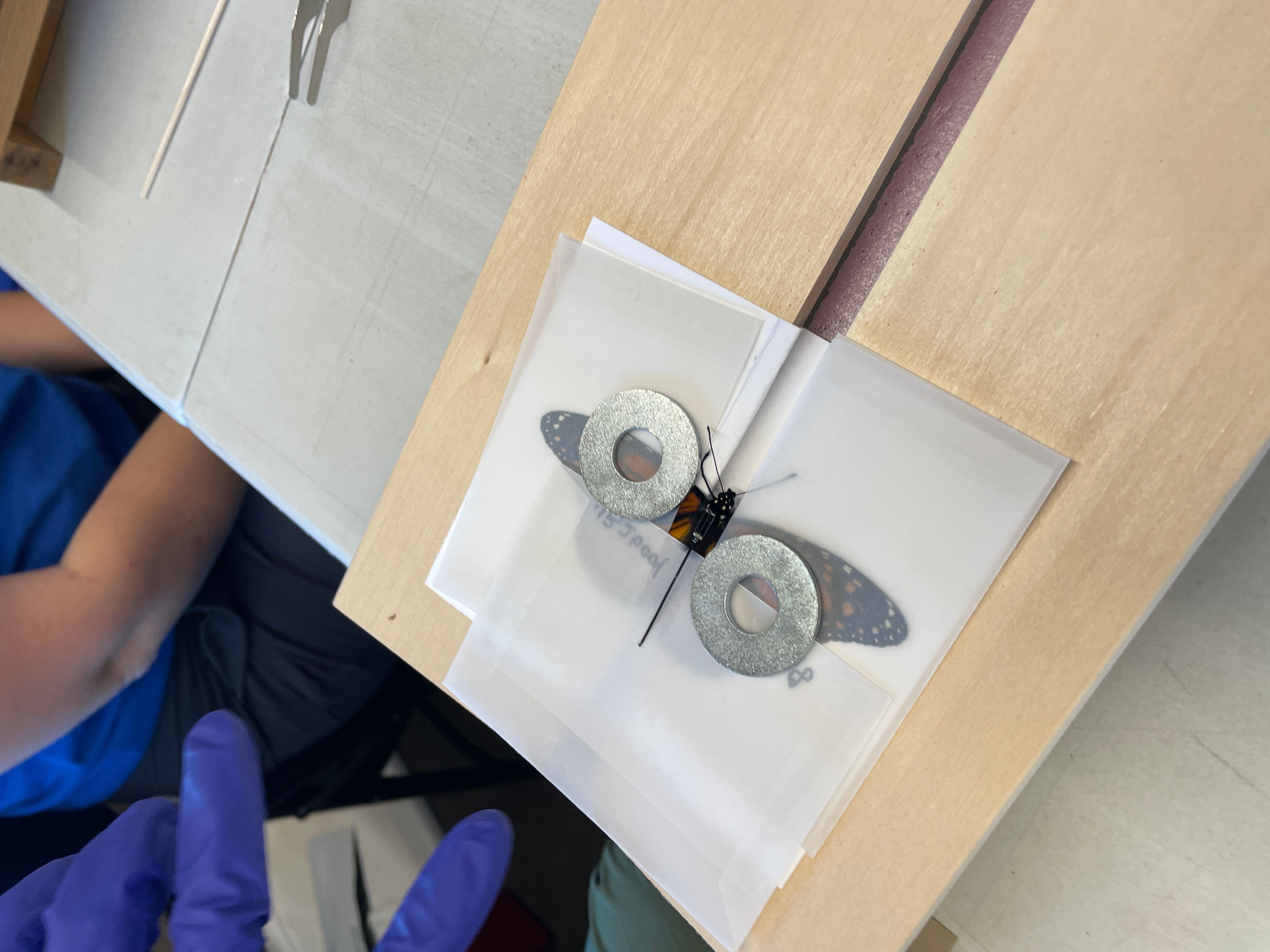 The butterfly is then chilled for up to 10 minutes to slow its body processes. and use a small amount of eyelash glue to attach the tiny tracker to its thorax. (Lianna Peters/PNN)
Why Manitoba matters
Manitoba sits near the northern edge of the monarch's range in the Prairies. The butterflies are primarily found in southern Manitoba and can potentially be found as far north as the Interlake.
Burns says monarchs are an iconic species that can help connect people with conservation.
With the help of a tracker, researchers are hoping those connections will lead to a better understanding of the monarch's migration and the challenges it faces along the way.


 Sat, Aug 29, 10:00 AM


 Manufacturing, Skilled Trades, Full-time
 Featured